
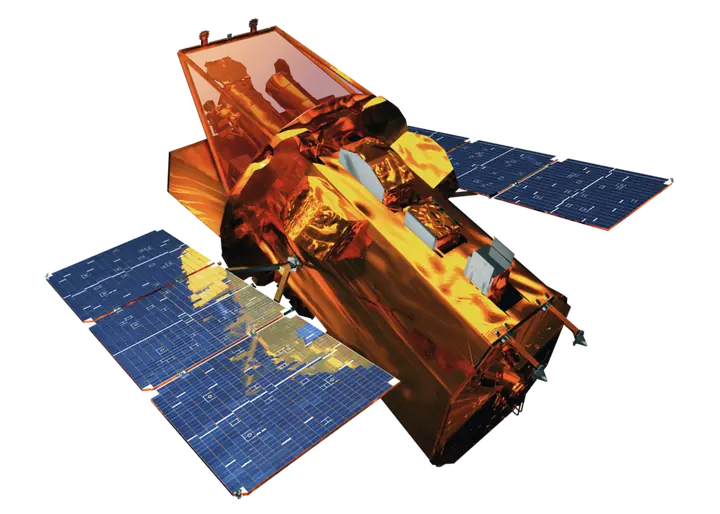
NASA's Neil Gehrels Swift Observatory, a $500 million gamma-ray telescope launched in 2004, is rapidly falling out of orbit. NASA commissioned Katalyst Space's Link spacecraft to rendezvous with Swift and perform a first-of-its-kind reboost mission. The reboost requires Swift to stay above 300 km, so this was a race against time - any substantial delays would cause the telescope to be lost.
- February 11
- The Swift team paused science operations and reoriented Swift to cut atmospheric drag, buying back 4 months of precious margin to save the mission.
- July 3
- Link launched, with docking expected a few weeks later.
- August 19
- NASA and Katalyst announced that the Link spacecraft had experienced unrecoverable control issues and would not be able to perform the docking and reboost.
In the public interest we have been publishing continuous lifetime forecasts here - a live view of the race to save Swift.
These data and plots are generated by Leonid's Satellite Lifetime Monitoring service, which combines real-time satellite tracking data with the latest space weather forecasts. Our industry-leading prediction engine is validated against six decades of spaceflight. New predictions are generated every 3 hours, ensuring rapid response to solar storms and changing atmospheric conditions.


